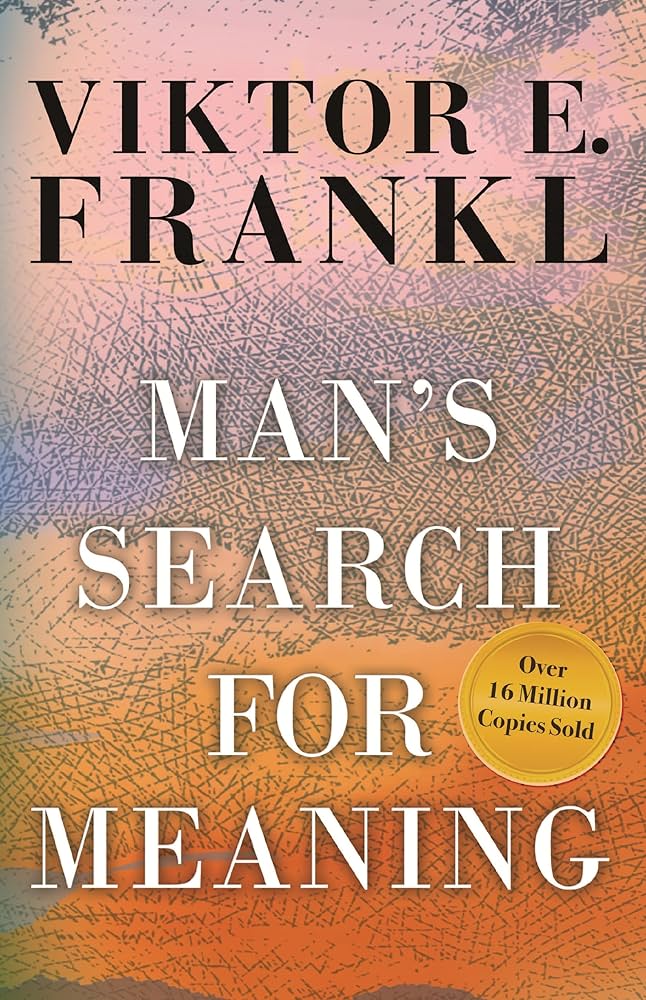
Now that I’m using Reading Refresh to keep myself up to date on books I’ve read in the past, I thought I’d share some of them as they came back up. Today is Viktor Frankl’s “Man’s Search for Meaning“.
Man’s Search for Meaning is one of the most powerful books I’ve read. Frankl spent three years in four different concentration camps during World War II, where both of his parents, his brother, and his wife all died. Frankl survived, partially due to luck but also due to the mental discipline that he practiced, which he shares in this book.
This quote from the book really does a good job of summarizing things:
Everything can be taken from a man but one thing: the last of the human freedoms—to choose one’s attitude in any given set of circumstances, to choose one’s own way.
He also shared a famous quote from Otto von Bismarck, which Frankl compared to the very long days but very short weeks in camp:
Life is like being at the dentist. You always think that the worst is still to come, and yet it is over already.
He also shared an interesting theory about how high hopes can be crushing. Other prisoners would be optimistic that “we’ll be out by Christmas” and when that didn’t happen, they were crushed. Frankl kept a more realistic view on things, which he felt was very helpful. From the book:
The death rate in the week between Christmas, 1944, and New Year’s, 1945, increased in camp beyond all previous experience. In his opinion, the explanation for this increase did not lie in the harder working conditions or the deterioration of our food supplies or a change of weather or new epidemics. It was simply that the majority of the prisoners had lived in the naïve hope that they would be home again by Christmas. As the time drew near and there was no encouraging news, the prisoners lost courage and disappointment overcame them. This had a dangerous influence on their powers of resistance and a great number of them died.
Ultimately, though, this isn’t a book that can be neatly broken into highlights. I encourage you to read it for yourself to really understand what Frankl went through. In the meantime, here is a bit more with this 4-minute summary from Reading Refresh: