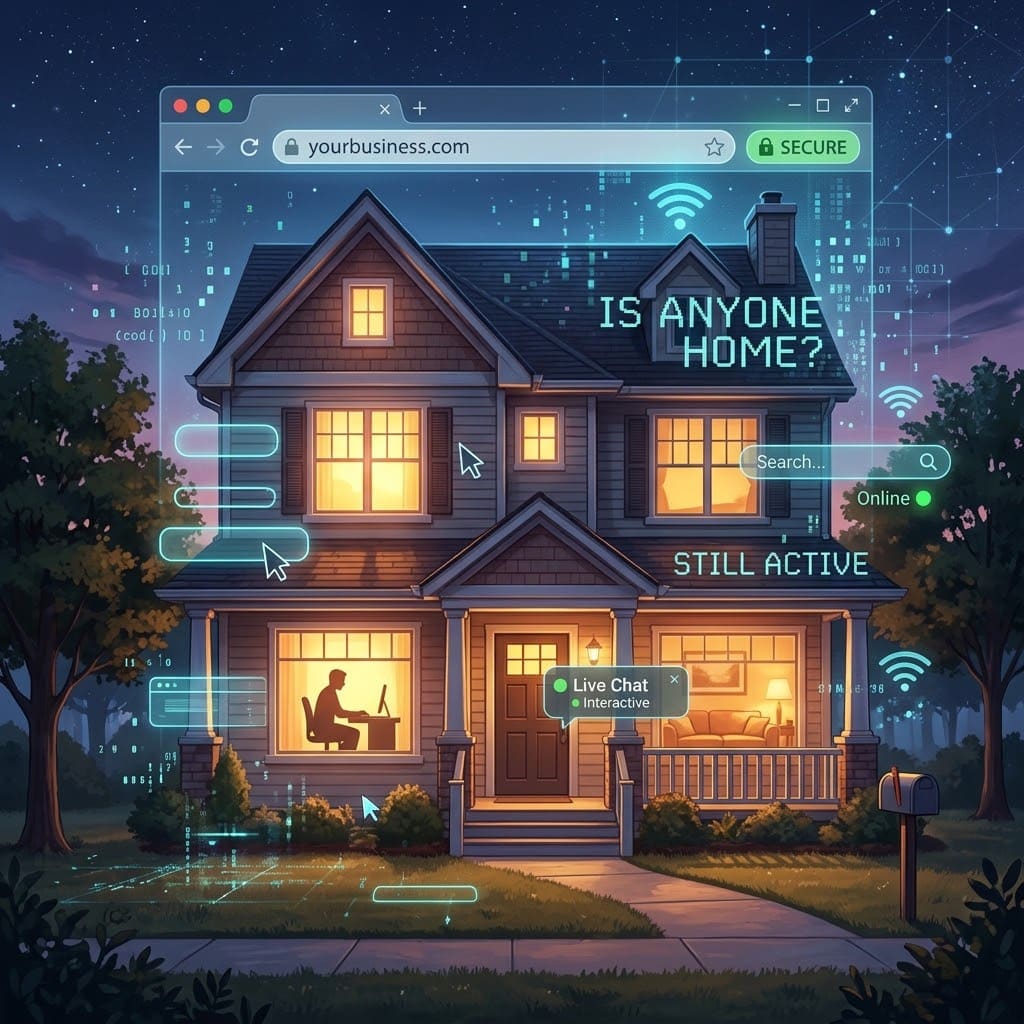
One thing I didn’t mention yesterday in my post about the 111,189 websites that I’ve scanned is just how many of them seem (maybe?) defunct. It’s hard to quantify, but there were seemingly quite a few. I dug deeper into some of them, and they mostly seem to still be in business, but their website made it hard to know for sure.
There were a variety of things that caused me to think this, and they’re all problematic if you’re doing the same.
Broken items: Anything truly broken on the site (images, links, etc) is certainly a bad sign.
Old events: Telling me “don’t miss our big event!” that was four months ago is a sign of a website in neglect.
Old/broken social: Social media links that were broken, or functional links that go to a social profile that has had no updates in years really raises some eyebrows. You’re still in business, but you didn’t post one single time on your Facebook page (which is linked on the home page of your website) in the past four years?
Graveyard of a blog: Blogging is certainly fading in popularity, but if your site has a blog in the main menu and your last post is more than six months old, that doesn’t look good. You don’t need to be crazy and blog every day, but once a month should be an easy minimum to hit.
As we progress deeper into the AI world, the growing value of a website is to simply support what people are learning elsewhere. You don’t have to amaze people (they did their research on ChatGPT and Instagram already), but just don’t blow it.
Check out the list above and see what you can tighten up on your site. It’s important to realize that most of these don’t require more work. For example, if you’ve decided that Facebook isn’t a valuable place for your business to be, that’s fine — just take the link off your home page.
It’s challenging to win new business from your website, but it’s super easy to lose it.