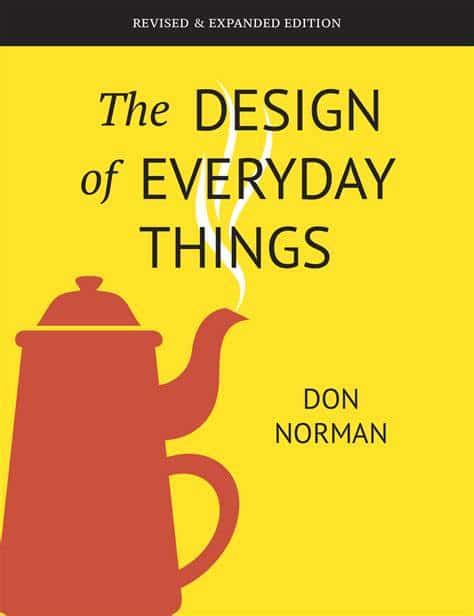
Now that I’m using Reading Refresh to keep myself up to date on books I’ve read in the past, I thought I’d share some of them as they came back up. Today is Don Norman’s “The Design of Everyday Things“. This book is also available as a free flashcard deck on Ripple Recall.
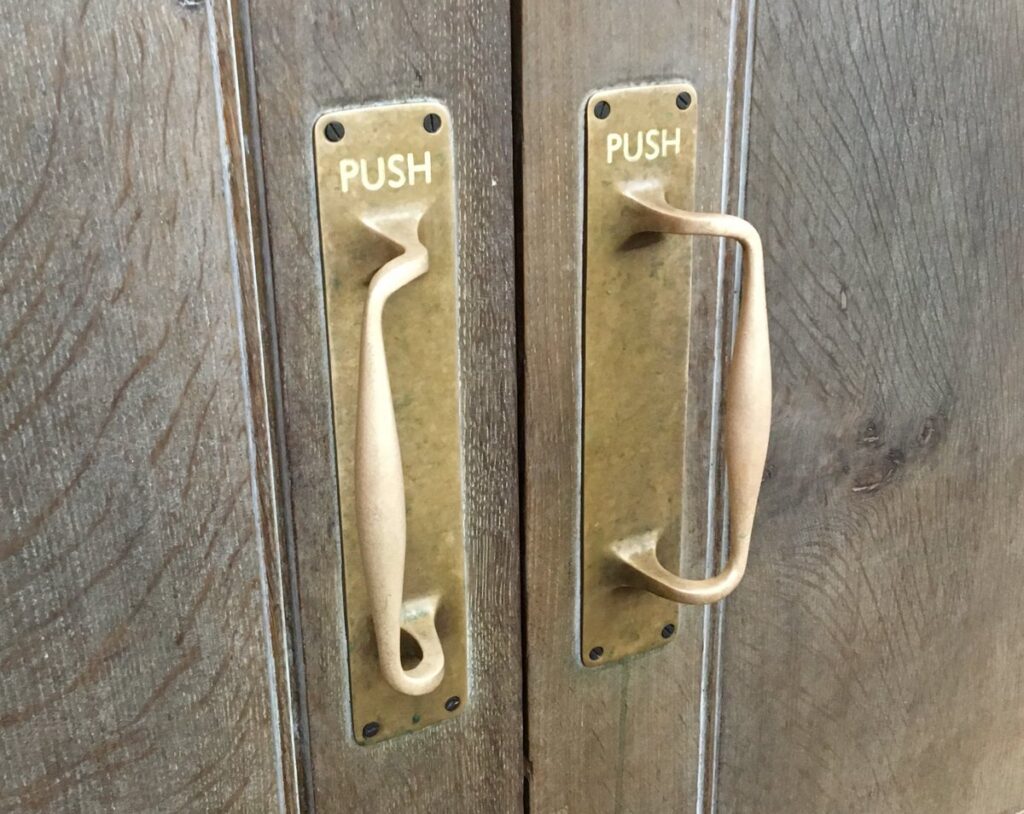
There is a simple lesson from this book that I notice almost every day in my life: The “Norman Door”. In short, a “Norman Door” is a door to a building that has to put a label on whether to push or pull because the design of it is so poor. A great example is this door, which has handles on it (clearly for pulling) but is instructing users to push instead.
Specifically, he says:
Whenever you see hand-lettered signs pasted on doors, switches, or products, trying to explain how to work them, what to do and what not to do, you are also looking at poor design.
We only notice these things because they’re bad. Good design is intentionally hard to notice. From the book:
Good design is actually a lot harder to notice than poor design, in part because good designs fit our needs so well that the design is invisible, serving us without drawing attention to itself. Bad design, on the other hand, screams out its inadequacies, making itself very noticeable.
While Norman is best known for his thoughts on doors, the book goes far deeper.
He also hits something that I struggle with quite a lot where I wish people would behave a certain way, but I need to accept that I can’t change their behavior. Norman says:
The problem with the designs of most engineers is that they are too logical. We have to accept human behavior the way it is, not the way we would wish it to be.
When trying to design something for many people, it can seem like the answer should just lie in the middle. That may be true sometimes, but other times it simply can’t work. He shares:
Some problems are not solved by adjustments or averages: Average a left-hander with a right-hander and what do you get?
He also explains the different mindset between designers and marketers. Both are important, but for very different reasons:
Designers understand what people really need. Marketing understands what people actually buy. These are not the same things, which is why both approaches are required.
Related to that, he shares this famous and oft-cited quote from Theodore Levitt:
People don’t want to buy a quarter-inch drill bit. They want a quarter-inch hole.
You need to build a drill bit that does a fantastic job, and that’s what people need to buy, but they’re really coming to you so they can get the hole.
It’s an excellent eye-opening book, and it’s essential reading for anyone in design or marketing. Grab it on Amazon, try your hand at some flashcards for it on Ripple Recall, or watch the short video below for a bit more: