Many people say that you should spend time in nature to help relax your mind, and I fully agree. Getting out of the office and into the woods can be a wonderful thing.
But why?
As David Allen has shared, “in traditional environments like walking in the woods, we are bombarded with sensory information“. How are we able to relax with all of that sensory input?
It’s all about what that input is demanding of us.
Allen gives two reasons why a stroll in the woods can be beneficial.
First, he says that “It’s because of the quantity and variety of visual and auditory input. In an environment of too little information, we get really uncomfortable. Sensory deprivation is unsettling.” We need some input.
Second, though, he explains why the sensory input from an overflowing inbox doesn’t have the same effect, saying: “Why isn’t lots of e-mail experienced as a soothing event, like a walk in nature? Why hasn’t it been accepted as part of our ordinary reality, like thinking all the time, as we do? One simple reason: each one of those e-mails might mean something.“
When inputs are demanding your attention, rather than just settling in the background, it makes a huge difference.
Soft Fascination
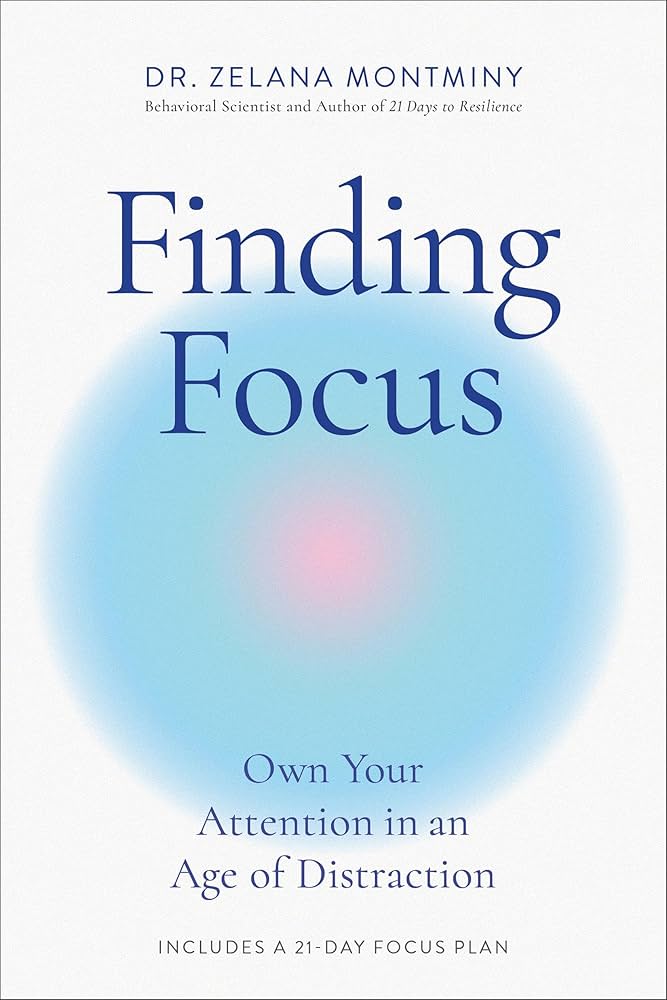
The idea for this post actually came from the book “Finding Focus“, where author Zelena Montminy shares this idea:
“According to the research, when our attention is engaged through this kind of “soft fascination,” without us needing to direct it or expend effort to focus, our top-down attention is able to rest and restore. In contrast, in urban environments we are constantly on alert, focusing our attention on signs, traffic, and other people as we interact consciously with our surroundings.”
If nothing else, I just love that little phrase — soft fascination. We can be fascinated by urban environments or busy inboxes, but soft fascination is a whole different thing and can be a wonderful escape from all of those demanding inputs.
Check out “Finding Focus” or David Allen’s article for more.