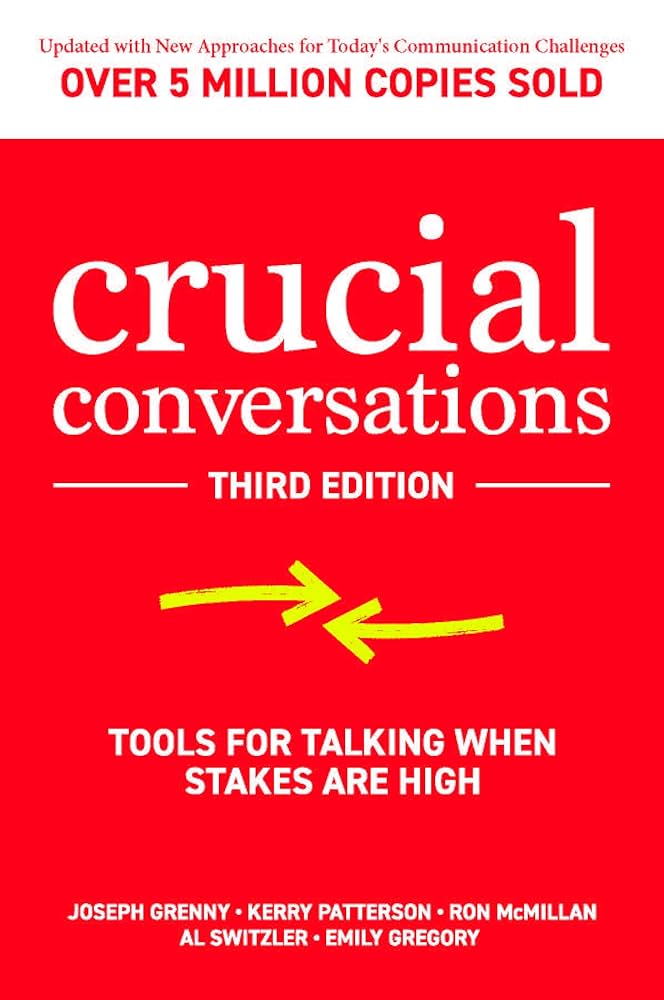
Now that I’m using Reading Refresh to keep myself up to date on books I’ve read in the past, I thought I’d share some of them as they came back up. Today is “Crucial Conversations“. This book is also available as a free flashcard deck on Ripple Recall.
It’s been a few years since I first read Crucial Conversations, so I figured it was time to give it a second look. I remember there were a lot of fantastic ideas in there, but the specifics have slipped over the years. Let’s dig back in together.
The crux of the book is, of course, having important conversations with people that matter in your life. As they share early on:
What makes each of these conversations crucial—and not simply frustrating, frightening, or annoying—is that the outcome could have a huge impact on either relationships or results that affect you greatly.
The key to most successful relationships is the ability have these crucial conversations and not shy away when things get tough. As they share from MLK, “Our lives begin to end the day we become silent about things that matter“. More specifically for those in our lives:
The mistake most of us make in our Crucial Conversations is we believe that we have to choose between telling the truth and keeping a friend.
Clearly stating the focus of the conversation can make a huge difference. As they share from Charles Kettering, “A problem well-stated is a problem half-solved“. For a specific example of ill-stated problems, this clip from the movie “Moneyball” is fantastic, because no one in the room really knows what problem they’re trying to solve.
They also stress the importance of being judicious with your words, saying “the more words it takes you to describe the topic, the less prepared you are to talk“. That reminds me of a few similar quotes from throughout history:
- “If I had more time, I would have written a shorter letter.” – Blaise Pascal
- “I’m going to make a long speech because I’ve not had time to prepare a short one.” – Winston Churchill
- “If you want me to give you a two-hour presentation, I am ready today. If you want only a five-minute speech, it will take me two weeks to prepare.” – Mark Twain
The book also urges us to have conversations when we’re in the right mindset. A crucial conversation should never be an argument. They share from Ambrose Bierce, who said “speak when you are angry and you will make the best speech you will ever regret.”
It’s important to preserve respect for both parties during these conversations. They provide the STATE framework to help do that:
- S: Share your facts (from least controversial)
- T: Tell your story (what you’re beginning to conclude)
- A: Ask for others’ paths (encourage others for their stories)
- T: Talk tentatively (your opinion, not fact)
- E: Encourage testing (seek opposing views, so you can test your theory against additional information).
It’s a fantastic book with far more than I can even scratch the surface of here. I encourage you to read the book for yourself (found here on Amazon), or try out the Ripple Recall cards for it to remember the lessons. For a smidge more, here is a short overview video of the book: