Foreword
People who understand these ideas will be well positioned to make the shift the authors describe from genius (where they may try to be the smartest person in the room) to genius maker (where they use their intelligence to access and multiply the genius in others). The power of such a shift is difficult to overstate. It is a night-and-day difference.
Preface
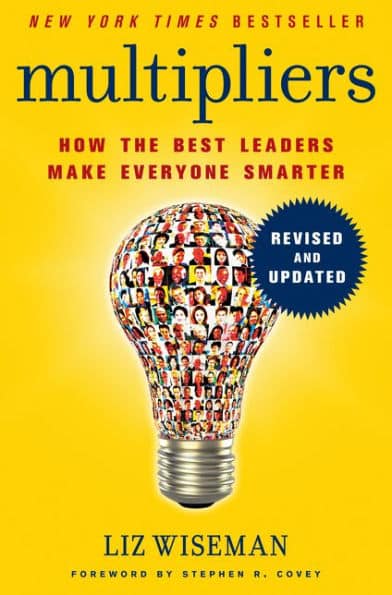
This book began with a simple observation: There is more intelligence inside our organizations than we are using. It led to the idea that there was a type of leader, those I came to call Multipliers, who saw, used, and grew the intelligence of others, while other leaders, whom I labeled Diminishers, shut down the smarts of those around them.
1. The Multiplier Effect
The Problem with Genius
Some leaders seemed to drain intelligence and capability out of the people around them. Their focus on their own intelligence and their resolve to be the smartest person in the room had a diminishing effect on everyone else.
Perhaps these leaders understood that the person sitting at the apex of the intelligence hierarchy is the genius maker, not the genius.
The Multiplier Effect
Multipliers get more from their people because they are leaders who look beyond their own genius and focus their energy on extracting and extending the genius of others.
The Five Disciplines of the Multiplier
- ATTRACTING AND OPTIMIZING TALENT.
- Multipliers are Talent Magnets; they attract and deploy talent to its fullest, regardless of who owns the resource, and people flock to work with them because they know they will grow and be successful. – The Diminisher is an Empire Builder who acquires resources and then wastes them. The Multiplier is a Talent Magnet who utilizes and increases everyone’s genius.
- CREATING INTENSITY THAT REQUIRES BEST THINKING
- The Diminisher is a Tyrant who creates a stressful environment. The Multiplier is a Liberator who creates a safe environment that fosters bold thinking.
- EXTENDING CHALLENGES.
- The Diminisher is a Know-It-All who gives directives. The Multiplier is a Challenger who defines opportunities.
- DEBATING DECISIONS.
- Diminishers are Decision Makers who try to sell their decisions to others. Multipliers are Debate Makers who generate real buy-in.
- INSTILLING OWNERSHIP AND ACCOUNTABILITY.
- The Diminisher is a Micromanager who jumps in and out. The Multiplier is an Investor who gives others ownership and full accountability.
They Have a Hard Edge.
One of the most critical insights from our study of Multipliers is how hard-edged these managers are. They expect great things from their people and drive them to achieve extraordinary results. They are beyond results-driven; they are tough and exacting. Indeed, Multipliers make people feel smart and capable, but they don’t do it by being “feel-good” managers. They look into people and find capability, and they want to access all of it and utilize people to their fullest. They see a lot, so they expect a lot.
They Don’t Play Small
They Have a Great Sense of Humor
On a whim, we added “Great Sense of Humor” to our leadership survey. Our suspicion proved right. Not only is this trait prominent among Multipliers, it is one of the traits that is most negatively correlated with the mindset held by Diminishers. Multipliers aren’t necessarily comedians, but they don’t take themselves or situations too seriously. Perhaps because they don’t need to defend their own intelligence, Multipliers can laugh at themselves and see comedy in error and in life’s foibles, and their sense of humor has a liberating effect on others.
The Accidental Diminisher
Perhaps one of our biggest surprises was realizing how few Diminishers understood the restrictive impact they were having on others.
2. The Talent Magnet
“I not only use all the brains that I have, but all that I can borrow”. – Woodrow Wilson
A Cycle of Attraction
In 1914, when venerated British explorer Ernest Shackleton decided to embark on an expedition to traverse Antarctica, he placed a recruitment advertisement in The Times (London), which read:
- Men wanted: For hazardous journey. Small wages, bitter cold, long months of complete darkness, constant danger, safe return doubtful. Honour and recognition in case of success.
Surprisingly, hundreds of men applied.
The Four Practices of the Talent Magnet
- Look for Talent Everywhere
- Talent Magnets are always looking for new talent, and they look far beyond their own backyard.
- Appreciate All Types of Genius
- Ignore Boundaries
- Find People’s Native Genius
- Look for What Is Native
- Talent Magnets know how to uncover and access the native genius of others. By “native genius” I mean something even more specific than a strength or a skill that might be highly rated on a 360- degree leadership assessment. A native genius or talent is something that people do, not only exceptionally well, but absolutely naturally. They do it easily (without extra effort) and freely (without condition).
- Label It
- Look for What Is Native
- Utilize People at Their Fullest
- Connect People with Opportunities
- Shine a Spotlight
- Marguerite then makes it clear to each person why she has been selected for that role. She not only notices their talent; she labels it for them. One camp leader said, “She tells me the talent she sees in me and why it matters. She tells me why girls’ camp will be better because of me and my work.” But Marguerite doesn’t stop there. She lets everyone else know, too. It is typical for her to introduce someone to the group by saying, “This is Jennifer. She’s a creative genius, and we are so fortunate to have her leading our art program.”
- Remove the Blockers
- Get Rid of Prima Donnas
- Get Out of the Way
- The late management guru C. K. Prahalad (who passed away in April 2010) was one of my mentors. He once shared with me an old saying in India: “Nothing grows under a banyan tree.” It provides shade and is comfortable, but it allows no sun in for growth. Many leaders are banyan trees; they protect their people, but nothing grows under them.
The Diminisher’s Approach to Managing Talent
- Acquiring Resources
- Putting People in Boxes
- Letting Talent Languish
Becoming a Talent Magnet
- Name the Genius
- Supersize It
- Let go of a Superstar
3. The Liberator
“The only freedom that is of enduring importance is the freedom of intelligence, that is to say, freedom of observation and of judgment.” – John Dewey
One corporate VP had a favorite saying, quoted often and written on her door: “Ignore me as needed to get your job done.”
Liberators also give people space to make mistakes. They create an environment of learning, but they expect people to learn from the mistakes. Another fair trade: I give you permission to make mistakes; you have an obligation to learn from the mistakes and not repeat them.
The Three Practices of the Liberator
- Create Space
- Release Others by Restraining Yourself
- Shift the Ratio of Listening to Talking
- Define a Space for Discovery
- Level the Playing Field
- Demand People’s Best Work
- Defend the Standard
- Distinguish Best Work from Outcomes
- Requiring people’s best work is different from insisting on desired outcomes. Stress is created when people are expected to produce outcomes that are beyond their control. But they feel positive pressure when they are held to their best work.
- Similar to the idea of “Good decisions can have bad outcomes“.
- Pressure versus stress
- K. R. Sridhar understands the distinction between pressure and stress. He cites the famous image of William Tell shooting an apple off his son’s head: “In this scenario, William Tell feels pressure. His son feels stress.” K. R. keeps the pressure on his team to act, but doesn’t create stress by holding them accountable for outcomes beyond their control.
- Requiring people’s best work is different from insisting on desired outcomes. Stress is created when people are expected to produce outcomes that are beyond their control. But they feel positive pressure when they are held to their best work.
- Generate Rapid Learning Cycles
- Admit and Share Mistakes
- Insist on Learning from Mistakes
- Tyrants and Liberators both expect mistakes. Tyrants stand ready to pounce on the people who make them. Liberators stand ready to learn as much from the mistake as possible. The highest quality of thinking cannot emerge without learning. Learning can’t happen without mistakes.
- Similar to:
- “Those who never make mistakes work for those of us who do.” – Henry Ford
The Diminisher’s Approach to Environment
- Dominate the Space
- Create Anxiety
- Judge Others
Becoming a Liberator
- Play Fewer Chips
- Label Your Opinions
- Talk Up Your Mistakes
- Get Personal
- Go Public
- Make Space for Mistakes
Multipliers are intense. Leaders who can discern and create the difference between a tense and an intense climate can access significantly more brainpower from their organizations.
4. The Challenger
“The number one difference between a Nobel Prize winner and others is not IQ or work ethic, but that they ask bigger questions.” – Peter Drucker
If leaders have to spread their intelligence across asking the questions and finding all the answers, they tend to ask questions they already know the answers to. Once a leader accepts that he or she doesn’t have to have all the answers, he or she is free to ask much bigger, more provocative, and, frankly, more interesting questions. They can pursue things they don’t know how to do.
The Three Practices of the Challenger
- Seed the Opportunity
- Show the Need
- Challenge the Assumptions
- Reframe Problems
- Lay Down a Challenge
- Extend a Concrete Challenge
- Ask the Hard Questions
- Let Others Fill In the Blanks
- Generate Belief
- Helicopter Down
- Cocreate the Plan
- Orchestrate an Early Win
The Diminisher’s Approach to Setting Direction
- Telling What They Know
- Testing What You Know
- Telling People How to do Their Jobs
Becoming a Challenger
- Take the Extreme Questions Challenge
- Create a Stretch Challenge
- Take a Bus Trip
- Take a Massive Baby Step
5. The Debate Maker
“It is better to debate a decision without settling it than settling a decision without debating it.” – Joseph Joubert
When the discussion was beginning to reach a settling point, he pushed harder, asking people to switch sides and argue against their previously stated position—“Chris, switch sides with Raza. Raza, you’ve been for this idea, you now argue against it. Chris, you now argue for it.” They would switch roles, which felt awkward for a moment or two, but soon they’d begin to pound the issues from the other vantage point.
The Three Practices of the Debate Maker
- Frame the Issue
- A common mistake is attempting to debate a topic rather than a question. The most productive debates are in answer to a well-defined question, one with clear, often mutually exclusive options. For example, a weak debate question is: Where should we cut expenses? A stronger debate question would be: Should we cut funding for project A or project B?
- Spark the Debate
- The Yin: Create Safety for Best Thinking
- The Yang: Demand Rigor
- Next came “the switch.” After asking people to come prepared with an opening position, he asked them to drop their position and argue from the exact opposite point of view. Imagine the effect this has on a team. By arguing from the opposite, or a different point of view, the individuals 1) see the issues from another person’s perspective, developing deeper empathy and understanding, 2) have to argue against themselves, surfacing the problems and pitfalls in their opening position, 3) find new alternatives that elicit the best ideas from the competing options, and 4) separate themselves from a position.
- Drive a Sound Decision
- Reclarify the Decision-Making Process
- Make the Decision
- Communicate the Decision and Rationale
The Diminisher’s Approach to Debate
- Raise Issues
- Dominate the Discussion
- Force the Decision
Becoming a Debate Maker
The cost of an opinion is evidence
As discussion leader, it was liberating to ask the questions but not give the answers. In fact, I found it strangely powerful. And when the students spouted off their views and interpretations of the story, it was thrilling to look them straight in the eye and say, “Do you have any evidence to support that claim?” Initially, they looked terrified. But they quickly learned that the cost of an opinion was evidence. ^2f5cff
- Ask the hard question
- Ask for evidence
- Ask everyone
- Ask people to switch positions
Discussion, Dissent, and Debate
Hubert H. Humphrey, America’s vice president under Lyndon B. Johnson, captured the essential principle of how Multipliers make decisions when he said: “Freedom is hammered out on the anvil of discussion, dissent, and debate.”
6. The Investor
“If you want to build a ship, don’t drum up the people to gather wood, divide the work, and give orders. Instead, teach them to yearn for the vast and endless sea.” – Antoine de Saint-Exupery
The Three Practices of the Investor
- Defining Ownership
- Give Ownership for the End Goal
- Stretch the Role
- Investing Resources
- Teach and Coach
- Diminishers tell you what they know; Multipliers help you learn what you need to know.
- Provide Backup
- Teach and Coach
- Hold People Accountable
- Give It Back
- Expect Complete Work
- Respect Natural Consequences
The Diminisher’s Approach to Execution
- Maintain Ownership
- Jump In and Out
- Take It Back
Becoming an Investor
- Give 51 Percent of the Vote
- When you delegate, you probably let people know what you are expecting of them. Take this to the next level and let people know that they (not you) are in charge and accountable. Tell them how you will stay engaged and support them, but that they remain in charge. Give them a number to make it concrete. For example, tell them they have 51 percent of the vote and that you have only 49 percent. Or be bold and make it a 75/25 split.
- Let Nature Take Its Course
- Let it happen
- Talk about it
- Focus on next time
- Ask for the F-I-X
- Give it Back
7. The Accidental Diminisher
“We judge others by their doings, but ourselves by our intentions.” – Edward Wigglesworth
– An example of the Fundamental Attribution error
Accidental Diminisher Profiles
- Idea Fountain: Creative, innovative thinkers who think they are stimulating ideas in others
- Always On: Dynamic, charismatic leaders who think their energy is infectious
- Rescuer: Empathetic leaders who are quick to help when they see people struggling
- Pacesetter: Achievement-oriented leaders who lead by example and expect others to notice and follow
- Rapid Responder: Leaders who are quick to take action believing that they are building an agile, action-oriented team
- Optimist: Positive, can-do leaders who think their belief in people will inspire them to new heights
- Protector: Vigilant leaders who shield people from problems to keep them safe
- Strategist: Big thinkers who cast a compelling vision thinking they are showing people a better place and providing the big picture
- Perfectionist: Leaders who strive for excellence and manage the fine details to help others produce superior work
As one aspiring Multiplier said, “I can’t control the ideas that pop into my head, but I can control the ones that come out of my mouth.”
8. Dealing with Diminishers
“However vast the darkness, we must supply our own light.” – Stanley Kubrick
Breaking the Diminishing Death Cycle
- It’s not necessarily about you
- Diminishing isn’t inevitable
- You can lead your leader
Defenses Against the Dark Arts of Diminishing Managers
- Turn down the volume
- Ignoring a negative situation typically requires an active choice. This is how Glenn Pethel, a sage education leader from Georgia, has learned to manage through frequent brushes with uncooperative colleagues. After these contentious encounters, his close associates would ask him why he wasn’t upset. Pethel, who speaks with a gentle, southern charm, would reply, “Because I don’t want to be. Something caused this person to behave this way, and it wasn’t necessarily me. Do I like it? No. But it’s not going to dip from my bucket.”
- Similar to to the book “Unoffendable”.
- Strengthen other connections
- Retreat and regroup
- Send the right signals
- Assert your capability
- Ask for performance intel
- Shop for a new boss
Multiplying Up
- Exploit your boss’s strengths
- Give them a user’s guide
- Listen to learn
- Admit your mistakes
- Sign up for a stretch
- Invite them to the party
Inspiring Multiplier Leadership in Others
- Assume a positive intent
- Address one issue at a time
- Celebrate progress
9. Becoming a Multiplier
“When I let go of what I am, I become what I might be.” – Lao-tzu
Bill Campbell, former CEO of Intuit, began his career more than thirty years ago as a college football coach at an Ivy League university.
Resonance, Realization, and Resolve
- Resonance
- Realization of the Accidental Diminisher
- Virtually all readers have confessed that they see some degree of diminishing behaviors in themselves.
- Resolve to be a Multiplier
Start with the Assumptions
- With diminisher assumptions: People will never figure this out without me.
- With multiplier assumptions: People are smart and can figure it out.
Work the Extremes
- Neutralize a weakness
- Top off a strength
Run an Experiment
- Labeling talent
- Liberating Lokesh (a story)
- Debating the Deal
- Investing in Renewable Energy
Brace yourself for setbacks
Ask a Colleague
10 Practices to Build a Multiplier Culture
- Hold a book talk
- Discuss Accidental Diminishers
- Introduce Multiplier mindsets
- Teach Multiplier skills
- Fuse Multipliers with daily decisions
- Codify a leadership ethos
- Spotlight Multiplier moments
- Measure managers
- Pilot a Multiplier practice
- Integrate practices with business metrics
Who is the smartest person?
We began this inquiry with an intriguing observation about two political leaders paraphrased by Bono, musician and global activist. He said, “It has been said that after meeting with the great British Prime Minister William Ewart Gladstone, you left feeling he was the smartest person in the world, but after meeting with his rival Benjamin Disraeli, you left thinking you were the smartest person.” The observation captures the essence and the power of a Multiplier.